

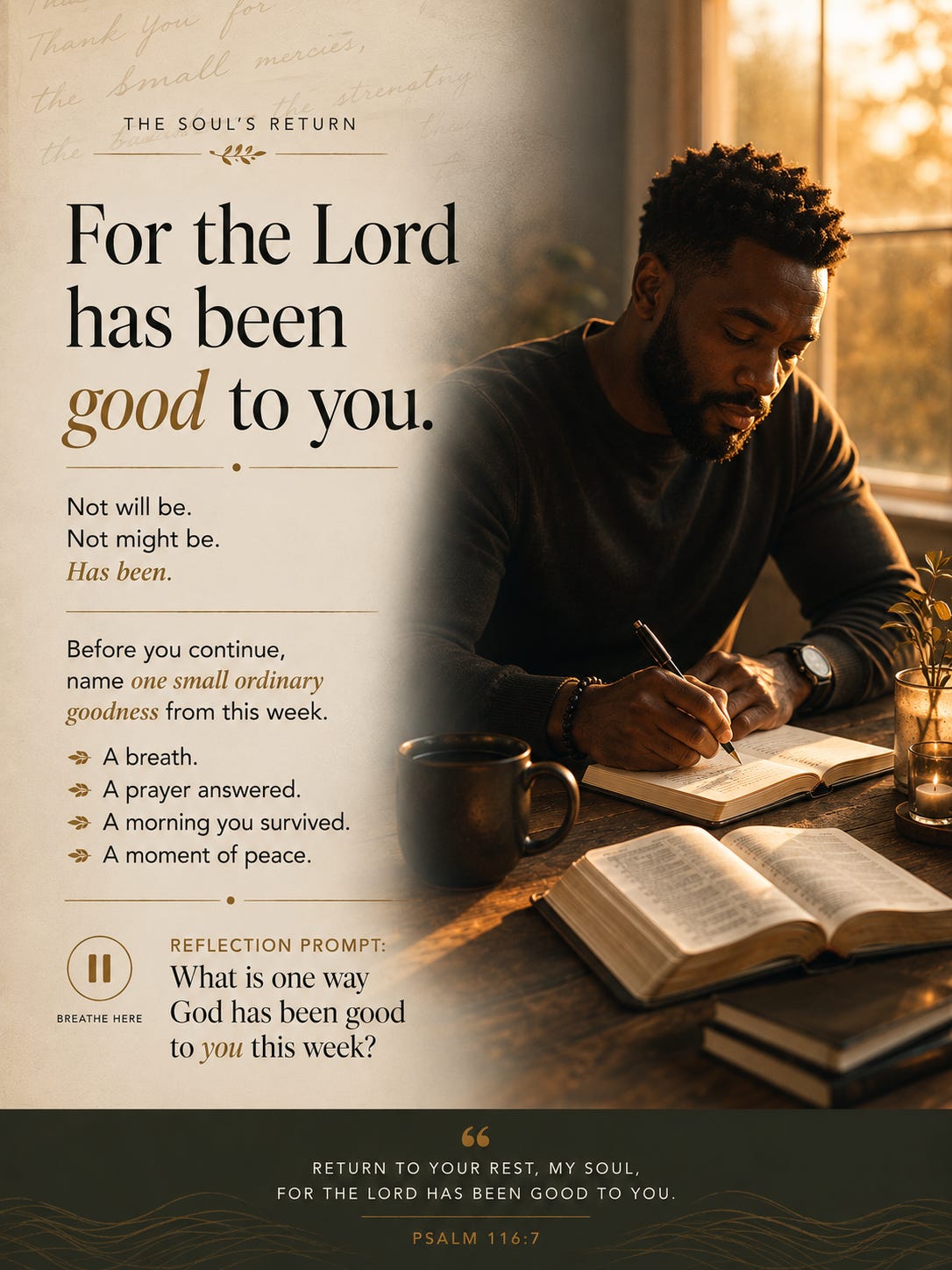
“Return to your rest, my soul, for the Lord has been good to you.”
Psalm 116:7
How long has it been since you talked to your own soul?
The psalmist does this in Psalm 116. He is in the middle of a psalm about being delivered from death, and he turns inward and addresses his soul like a parent who has been watching a child pace the hallway too long. Return to your rest, for the Lord has been good to you. An instruction and a reason, and then he keeps going.
I want to sit with the first word of that instruction, because it carries the whole meditation.
Return.
Which means there is somewhere to return to. Which means rest is not a far country you have to learn the language of. It is a place that already belongs to you, one you keep wandering away from, one that keeps inviting you back. The door waits.
The Wandering Is Not the Problem
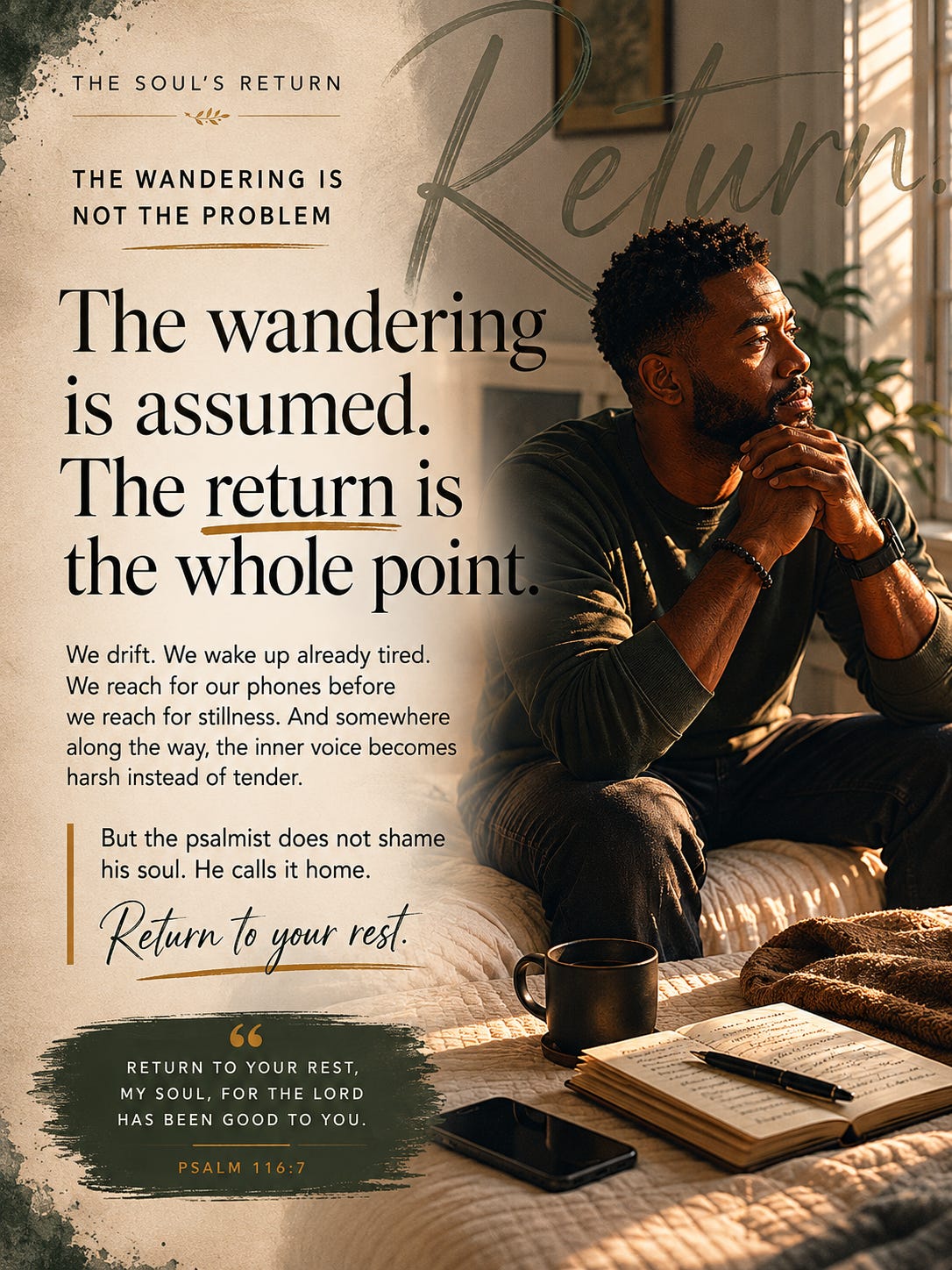
I think a lot of us carry quiet shame about how often we drift. We wake up tired. We forget to pray. We open our phones before we open our eyes, and by the time we notice we have been pulled out of ourselves it is somewhere around eleven in the morning and we have not stopped moving since the alarm. And the inner voice that meets us in that moment is rarely tender. It usually sounds like you should be doing better than this.
The psalmist does not sound like that. He sounds like someone who has wandered enough times to know the way home. He is not scolding his soul. He is calling it. Return. The wandering is assumed. The return is the whole point.
This is one of the small mercies of contemplative practice. It does not require you to start from somewhere you have never been. It requires you to remember what your soul already knows, and to come back to it as many times as you need to. The practice is the returning.
What the Body Is Doing While the Soul Wanders
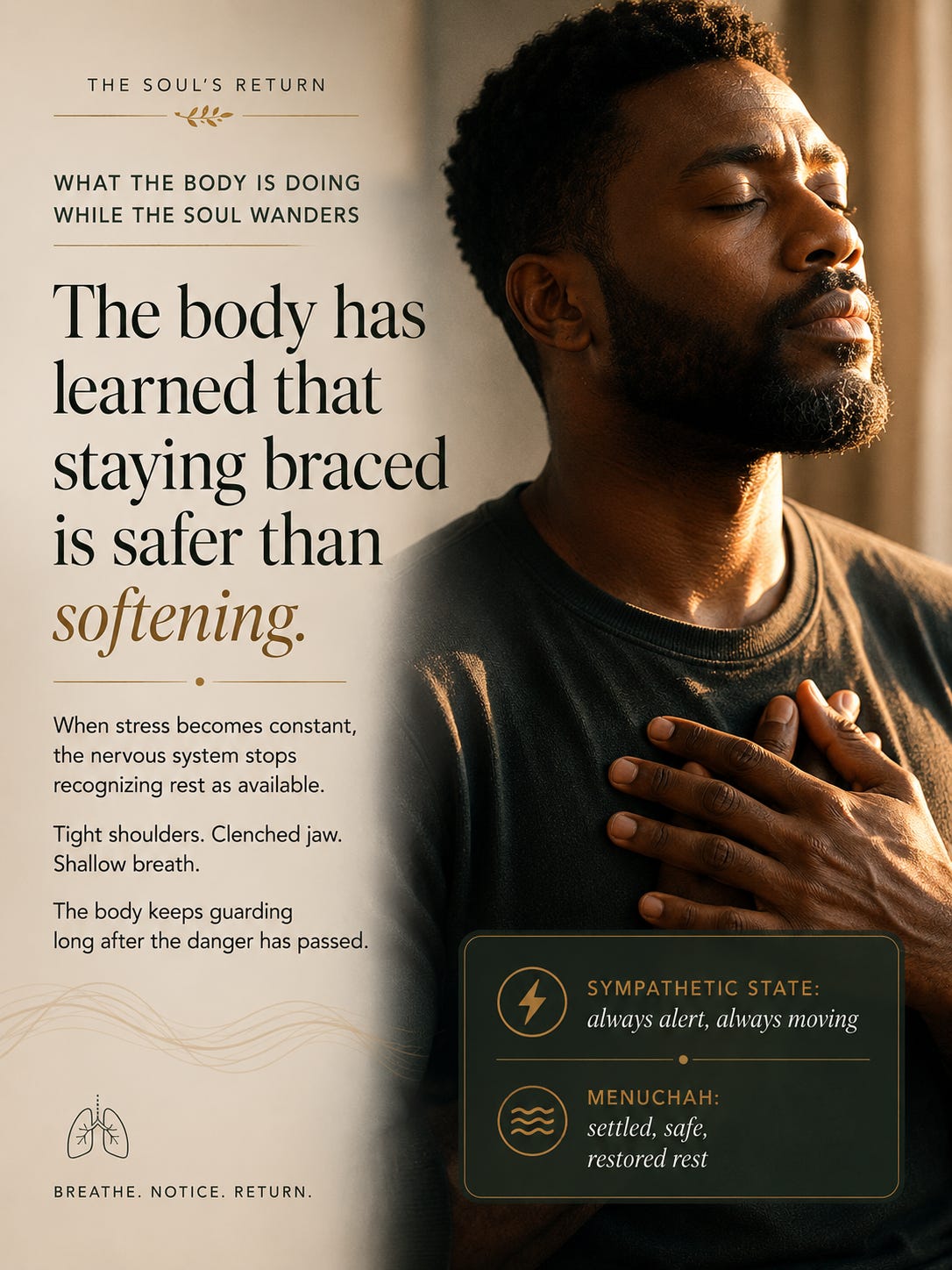
When you have been running on adrenaline for a long stretch, your nervous system stops registering rest as available. The sympathetic state becomes the baseline. You sit down and your shoulders stay up. You lie down and your jaw stays clenched. The body has learned that staying braced is safer than softening, because softening, once, was punished.
This is why telling yourself to relax does not work. You can know the truth of Psalm 116 by heart and still be holding the doorframe. The body has to be reintroduced to rest, and it happens slowly, through breath and silence and the small repeated act of returning, until it learns that return is not a trick and the rest on the other side is real.
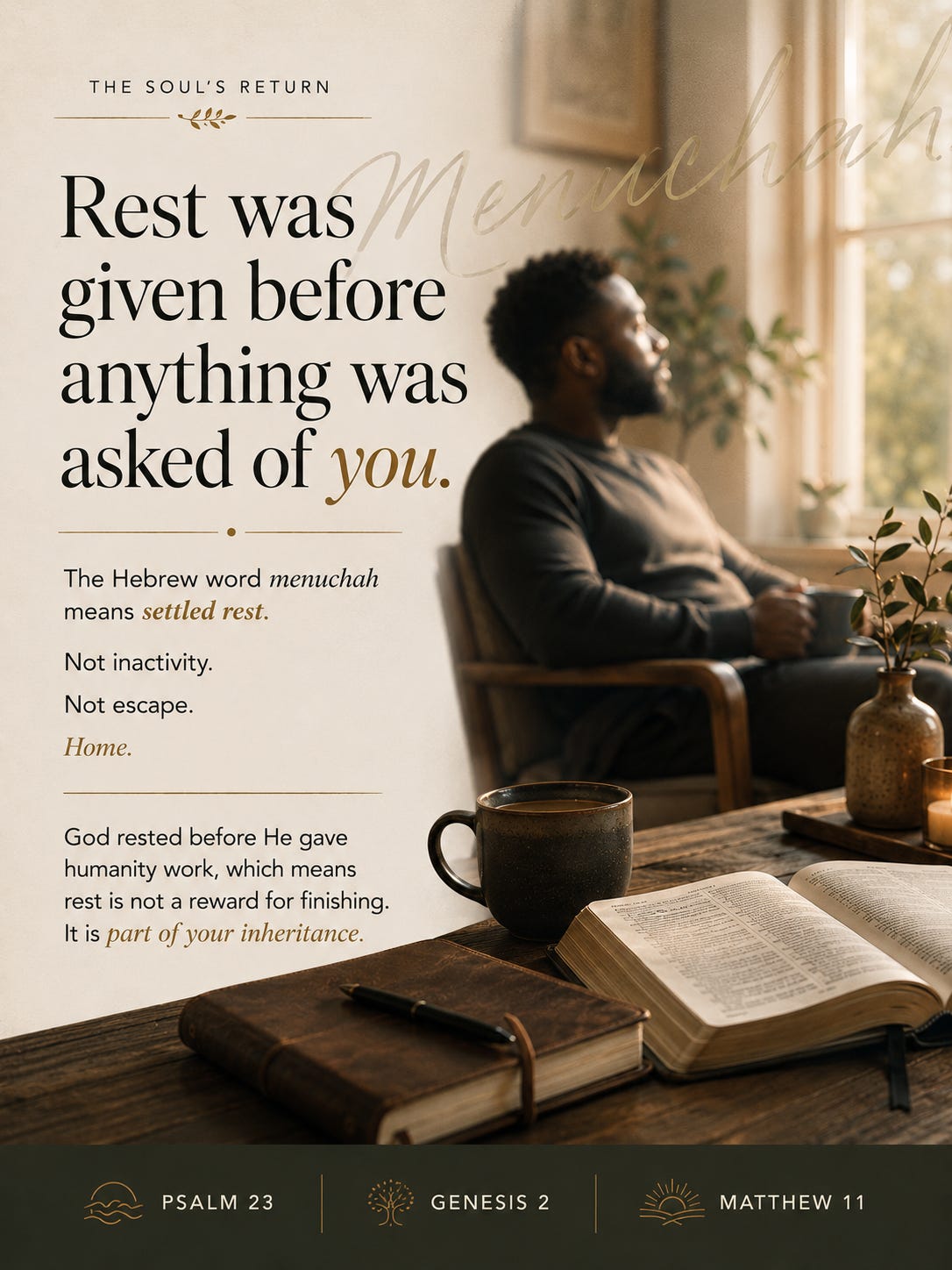
The Hebrew word the psalmist uses for rest in this verse is menuchah, and it does not mean inactivity. It means settled rest. The kind you would have on the seventh day if you had actually let the work be finished. It is the same root that runs through the Sabbath language in Genesis and through the quiet waters of Psalm 23, and it is the rest Jesus is talking about when He says come to me in Matthew 11. A whole inheritance hiding inside one verb.
Which means when the psalmist tells his soul to return to its rest, he is not telling it to lie down for five minutes. He is telling it to come home to something that was given before anything was asked of it. God rested before He gave us anything to do, which makes rest the first inheritance, not the bonus you earn after the work.
One Small True Goodness
Notice what the psalmist gives his soul as the reason to return. For the Lord has been good to you.
Not for the Lord will be good to you. Not for the Lord might be good to you if you stay faithful. Has been. Past tense. Already true. The reason to return to rest is not a future promise you have to hope for. It is a history you can remember.
So before you press play on what is below, let me ask you something. Not a big something. A small something.
Can you name one way God has been good to you this week? Not the highlight reel. One small ordinary goodness. A prayer that got answered, or a morning you made it through, or the breath you are taking right now.
Let it have a name. Let it be specific. The saying-it-back is what the meditation is for.
The Practice
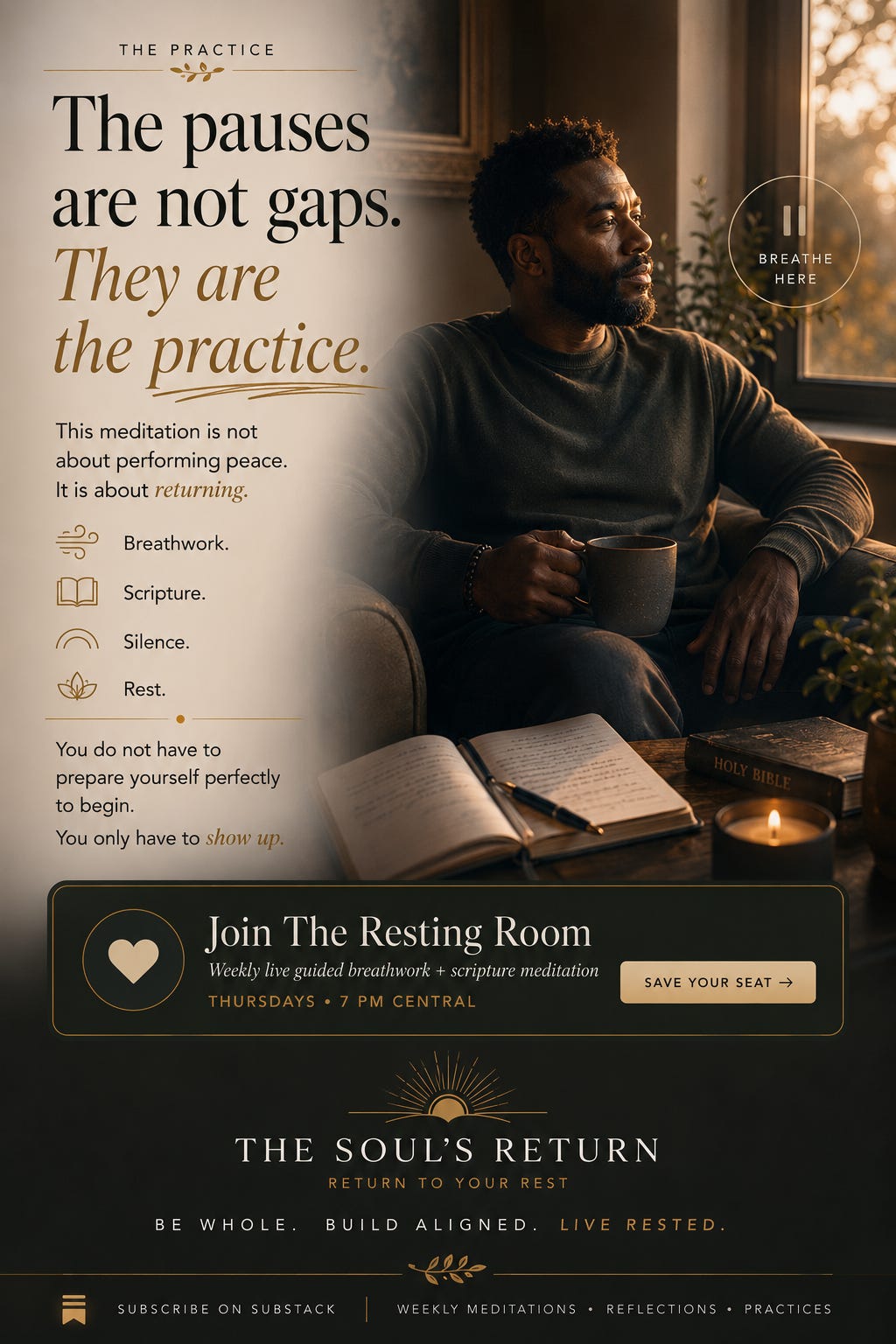
The meditation below is five minutes. It is built on Psalm 116:7, and it teaches you how to do what the psalmist did, which is talk to your own soul. There are long pauses in it. The pauses are not gaps. They are the practice. The silence is where the work happens, which means you do not have to fill it and you do not have to fear it. You just have to stay.
Find a place where you can be still. A chair, the floor, your bed. Anywhere your body can soften. You do not need a candle or a posture or a prepared heart. You only need to show up. You are already here. That is the beginning.
If This Met Something
If this meditation met you somewhere, I want you to know it is not a one-time practice. It is a weekly rhythm, and it has a room.
The Resting Room is a free, weekly live gathering where we do this work together. Breathwork. Meditation. Scripture. Silence. It is the same return, deepened by being in the same room with other people who are also coming home.
You can return as many times as you need to. The door does not close.
Return to your rest, my soul. The Lord has been good to you.
Be whole. Build aligned. Live rested.

The audio for this meditation is at the top of this page. When you’re ready, scroll up and breathe it with us.


